I build end-to-end AI systems for clinical decision-making.
ML Pipelines · Clinical AI · Backend + Agents
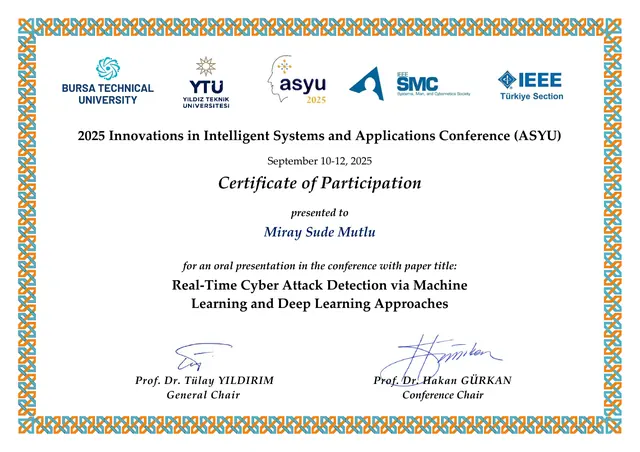
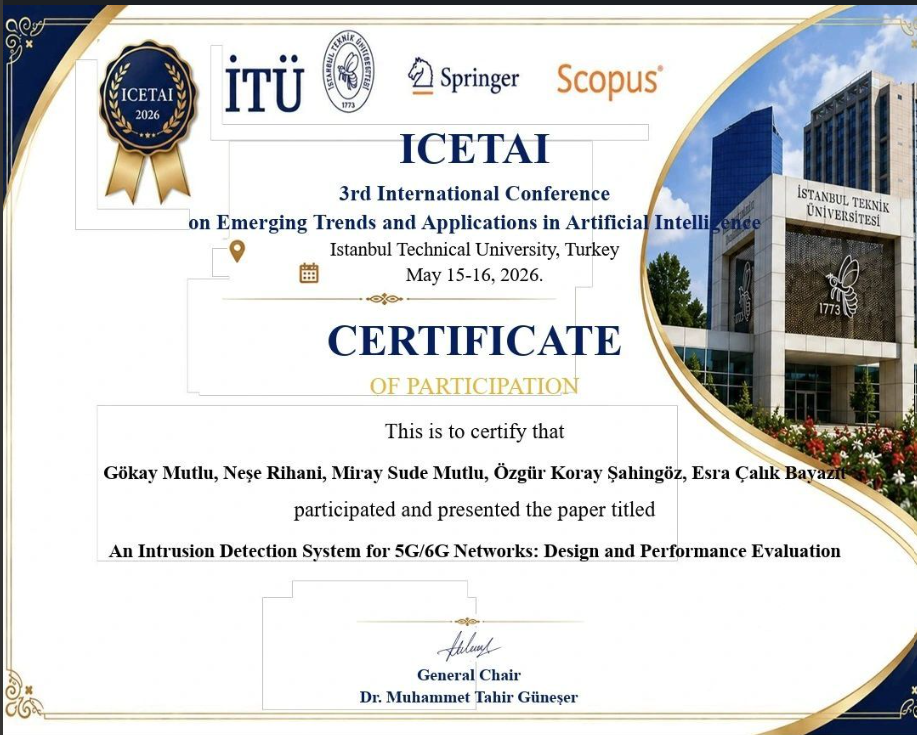
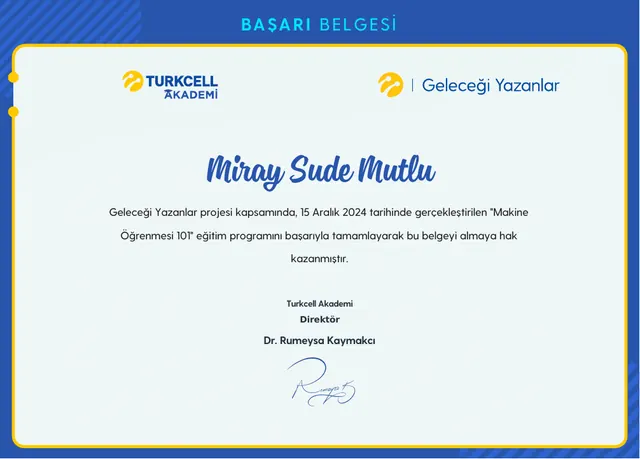
I am a Computer Engineer who designs and builds end-to-end ML pipelines, scalable backend services, and intelligent AI agent architectures. From programmatic data processing to the integration of large language and protein models (LLM/PLM) and optimization via genetic algorithms, I architect and implement every software and system layer of a project from the ground up. I apply these robust system architectures across high-data-density domains including clinical decision support, pharmacological risk prediction, Alzheimer's MRI radiomic analysis, preeclampsia risk modelling, and network security. In addition to my first-authored publication at IEEE ASYU 2025, I lead the ML and backend infrastructure in university-funded (BAP) research projects and TEKNOFEST innovation competitions.
IMMUNO-TCR: AI-Driven TCR–Neoantigen Prediction and Safety Platform for Glioblastoma
In-silico decision support that ranks TCR candidates for personalised glioblastoma immunotherapy, with calibrated confidence and an off-target safety scan.
Built v4, a dual-sequence binding model: shared-weight ESM-2 (35M) encoders for TCR CDR3β and epitope, Atchley physicochemical features, cross-attention, an HLA pseudo-sequence encoder and a V/J gene channel; the gene channel alone adds +0.1335 macro-AUROC in ablation.
Engineered an epitope-strict data pipeline over 8 databases (VDJdb, McPAS-TCR, NeoTCR, CEDAR, MIRA, ImmRep23 and others): 314,421 training rows across 1,053 unique epitopes, with leakage-free CDR3β-strict splits and HLA-aware negative sampling.
Ranked first of six open models on a frozen 15,715-row held-out set (macro-AUROC 0.686); on the ImmRep23 out-of-distribution set it stays near random (0.502), which we report openly as the field-wide generalisation ceiling.
Wrapped predictions in a three-engine decision-support platform (Next.js, FastAPI, Docker): temperature calibration with Mondrian conformal abstention, TCGA-GBM evidence fusion, a 20,431-protein off-target safety scan and a Turkey-specific HLA panel reaching 73.15% coverage with five epitopes.
Stress-tested the platform end to end with 3,200 real CDR3β sequences from 8 GBM patients, with zero crashes.
Python
PyTorch
ESM-2
HuggingFace Transformers
Scikit-learn
FastAPI
Next.js
Docker
WandB
RunPod (H100 GPU)
Clinical AINovember 2025 – April 2026
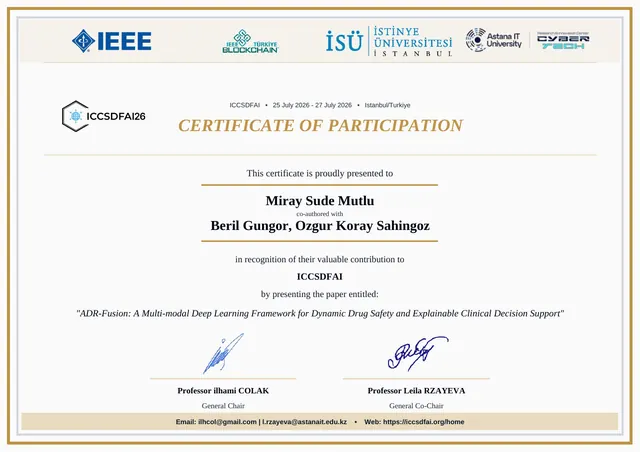
ADR-Fusion: Clinical Decision Support System
Fuses 6 pharmacological databases into an explainable system that scores adverse drug reaction risk.
Fused 6 pharmacological databases (DrugBank, SIDER, FAERS, DailyMed, ChEMBL, DrugBank Pathways) into a unified dataset of 1,409 drugs × 975 features via a multi-source ETL pipeline with NLP-based SOC extraction from FDA SPL documents.
Built a two-stage ML architecture: FAERS-tier specialist ensemble (XGBoost / Balanced RF / GNN-GAT hybrid) for binary ADR risk scoring (0–100), plus Binary Relevance RF for 17 WHO MedDRA SOC classes (F1 Macro 0.782, best class Skin F1 0.955).
Implemented ADR Burden Score, patient personalisation (Charlson CCI + Beers Criteria), guideline-anchored alert engine (ADA 2024, KDIGO 2021, ESC/ESH 2023), and ATC + SOC-filtered alternative drug recommendations with ~22,000 Turkish brand-name lookup.
Deployed React 18 / TypeScript clinical interface with SHAP feature attribution, per-SOC probability charts, and a parallel multi-agent LLM assistant: 4 models (Llama 3.3 70B, Llama 3.1 8B, GPT-4o Mini, Gemini 2.0 Flash) queried concurrently via Promise.all with consensus synthesis by a GPT-4o Mini judge.
Python
Scikit-learn
XGBoost
PyTorch
RDKit
React
TypeScript
FastAPI
PostgreSQL
SHAP
Optuna
Groq API
OpenRouter
Clinical AIMarch 2026 – April 2026
Alzheimer's Biomarker Classification via MRI Radiomics
Classifies Alzheimer's from 10,734+ MRI radiomic features across 64 benchmarked model configurations.
Benchmarked 64 model configurations (8 feature selection × 8 classifiers) using 5-fold stratified cross-validation with SMOTE for class imbalance (523 control vs. 348 Alzheimer's).
Achieved ROC-AUC 0.855 (LASSO + Logistic Regression) with bootstrap-validated 95% CI [0.839–0.871]; generated automated performance visualisations.
Python
Scikit-learn
Pandas
SMOTE
LightGBM
XGBoost
Clinical AIJuly 2025 – Present
Preeclampsia Risk Prediction via Machine Learning
A leakage-safe clinical pipeline that predicts preeclampsia risk and explains it to clinicians with SHAP.
0.890AUC
How it works
1Obstetric records
2Cleaning + 48 features
39 models · 5-fold CV
4Youden threshold
5SHAP for clinicians
Consolidated raw clinical obstetric patient data and programmatically resolved Excel locale-induced date corruption, out-of-biological-range laboratory anomalies, and duplicate records.
Engineered 48 new features from repeated laboratory measurements using clinical domain knowledge; managed 14.6% class imbalance in the multi-rule OR-defined target variable using SMOTE.
Built a fully leakage-safe end-to-end pipeline; trained 9 models including XGBoost, LightGBM, CatBoost, and Random Forest via 5-Fold Cross-Validation, achieving AUC 0.890.
Optimised the decision threshold using the Youden Index, reducing the number of high-risk cases missed by the model by 18%.
Conducted SHAP analysis to make model decisions interpretable for clinicians (explainable AI); integrated findings into a manuscript draft targeting peer-reviewed publication in 2026.
Python
Pandas
NumPy
Scikit-learn
XGBoost
LightGBM
CatBoost
Matplotlib
SHAP
SMOTE
Systems & AppsDecember 2024 – Present
YADIGAR – AI-Assisted Academic Research Platform
Production backend for an AI-assisted academic research platform: auth, roles and service APIs.
JWTauth + RBAC
How it works
1Users & roles
2JWT auth
3Spring Boot services
4PostgreSQL
Designed and implemented a production-level backend architecture: user management, role-based access control, and JWT-based authentication.
Optimised PostgreSQL schema and inter-service API contracts for scalability and maintainable integration.
Established clear API documentation to stabilise the development and testing pipeline across the team.
Java
Spring Boot
PostgreSQL
RESTful API
JWT
Generative AIMay 2025
AI Podcast Generator
Turns a single text prompt into a two-speaker audio podcast with GPT-2 and Bark TTS.
Built an end-to-end pipeline that converts a single text prompt into a multi-speaker audio podcast: GPT-2 generates a structured two-speaker dialogue (context window: last 4 lines, temperature 0.75), then Suno Bark (small) synthesises each line to 22,050 Hz WAV.
Implemented automatic language detection (EN/FR), per-speaker voice differentiation, and Pydub-based audio concatenation with 300ms silence padding, exported as a single final_podcast.wav.
Exposed the full pipeline through a Gradio web interface with real-time progress feedback, built-in audio preview, and one-click download.
Python
HuggingFace Transformers
GPT-2
Bark TTS
Gradio
Pydub
NumPy
SecurityFebruary 2025 – July 2025
Real-Time Network Intrusion Detection System (UNSW-NB15)
ML and deep learning models for real-time network attack classification on UNSW-NB15.
Designed and benchmarked ML and deep learning models for real-time network attack classification on the UNSW-NB15 benchmark dataset.
Applied cross-validation and ROC-based evaluation to identify the most balanced model configuration across attack categories.
Compiled findings into a paper presented as first author at IEEE ASYU 2025, published in IEEE Conference Proceedings. DOI: 10.1109/ASYU67174.2025.11208415
Python
Scikit-learn
Keras
Pandas
Matplotlib
Systems & Apps2025
WanderLog – Personal Travel Journal
A mobile travel journal with maps, GPS-tagged memories and an auto-generated digital passport.
Built a full-stack mobile travel journal (React Native + Expo) with Firebase Authentication and Firestore for real-time cloud storage; supports complete CRUD operations for travel memories with multi-photo uploads, GPS tagging, and personal journaling.
Implemented an interactive map view (react-native-maps) with custom markers, a digital passport that auto-generates country flags from ISO 3166-1 codes via Nominatim reverse geocoding, and a statistics dashboard tracking countries and cities visited.
Solved real-time state synchronisation between screens using React Navigation's useIsFocused hook, and built a custom country-name-to-ISO mapping layer for consistent flag emoji rendering across locales.
React Native
Expo
Firebase Auth
Firebase Firestore
react-native-maps
Nominatim API
expo-location
expo-image-picker
04
Hackathons
Smart City2026 · Datathon
IBB Datathon 2026 · Istanbul Metropolitan Municipality (IBB)
AI-VENGERS — IETT Smart Passenger Assistant & Optimization System
A smart passenger assistant and fleet optimiser for Istanbul's 5.5M daily bus riders.
A data-driven smart transportation system for Istanbul's 5.5 million daily passengers — tackling fuel waste, lack of dynamic routing, and accessibility gaps through ML, graph theory, and an inclusive NLP assistant.
Trained a Gradient Boosting model on 38M+ rows of IETT trip data (Accuracy 0.8997, F1 0.8607) to predict low-occupancy trips; recommended replacing articulated buses (160 cap.) with standard buses (94 cap.) during off-peak hours — estimated annual saving of ₺199,131,896.
Built a dynamic route management module that detects real-time failures and cancelled trips, automatically suggests alternative routes, and redirects nearby available vehicles to critical points.
Developed an inclusive NLP + Groq LLM assistant (voice + chat) with intent parsing, slot filling, and GTFS API integration — enabling GPS-based nearest stop detection and real-time trip status queries for elderly and disabled users.
Python
Gradient Boosting
Streamlit
Flask
Groq LLM
NLP
GTFS API
Pandas
Clinical AIMarch 06–08, 2026
ACUHIT 2026 · Acıbadem Mehmet Ali Aydınlar University
Auris — Making Invisible Risks Visible
Clinical decision support that flags drug–lab risks the moment a doctor prescribes.
A clinical decision support system (CDSS) triggered the moment a physician prescribes a drug — scanning the patient's full lab history, chronic conditions, and active medications to generate a personalised risk score.
Fused a hybrid decision engine (Rule×0.50 + LightGBM×0.30 + NLP×0.20) across 26 clinical rules for 12 drug groups (NSAIDs, Metformin, ACE inhibitors, Statins, Anticoagulants…), benchmarked against 4 models — LightGBM selected with AUC 0.9664, F1 0.8964 on 39,000 patients and 45 features.
Queried 71M+ lab records via DuckDB with window-function-based GFR trending, HbA1c unit normalisation, and polypharmacy detection; validated drug-lab interactions retrospectively using Wilcoxon Signed-Rank tests (Diclofenac → creatinine ↑, Statin → CK ↑, ACE → K⁺ ↑, Loop diuretic → K⁺ ↓, all p < 0.05).
Built a Streamlit dashboard with colour-coded risk cards (RED/YELLOW/GREEN), NLP-generated pharmacological mechanism explanations (evidence level A/B/C via Nexpath API), voice input/output (Web Speech API, tr-TR), and ATC-filtered safer alternative drug suggestions. Achieved 7/7 correct classifications across 6 test patients.
Python
LightGBM
XGBoost
Streamlit
DuckDB
SHAP
SMOTE
Nexpath API
Web Speech API
Smart City2025 · 32-hour hackathon
Tech Istanbul Hackathon 2025 · Tech Istanbul
JoyRideAI — Smart City Transportation Ecosystem
A comfort-first smart city mobility ecosystem, built in 32 hours on real Istanbul open data.
A data-driven smart city mobility ecosystem built in 32 hours using real Istanbul open data. Focuses on comfort and sustainability rather than just speed — making public transit attractive by predicting crowding before it happens.
Trained crowding prediction models (CatBoost, LSTM, XGBoost, Random Forest, SVM, DNN) on hourly passenger data from the IBB Open Data Portal, achieving 99.83% accuracy for station occupancy forecasting.
Built route optimisation using Ant Colony Optimisation (ACO) and graph theory with real road distances via OSRM (Open Source Routing Machine), enabling comfort-score-based routing that avoids peak crowding.
Developed a dual-product system: a React Native mobile app for passengers (comfort-based routing, Istanbul transit hacks) and a React.js + Leaflet.js web dashboard for IBB operators (real-time station monitoring, automatic extra-service interval recommendations via FastAPI).
Python
CatBoost
LSTM
XGBoost
FastAPI
React.js
React Native
Expo
Tailwind CSS
Leaflet.js
OSRM
TensorFlow
Scikit-learn
05
Experience
Machine Learning Researcher
Biruni University – BAP Research Project
OngoingSeptember 2025 – Present
QuestionCan a genetic algorithm find better feature subsets than classic selection methods?
MethodA GA framework with fitness-function evaluation, benchmarked against traditional selectors under 5-fold cross-validation, binary and multi-class.
OutcomeResults being finalised; manuscript in preparation for a peer-reviewed journal.
Leading all ML responsibilities within a university-funded (BAP) research project, overseeing the full pipeline from domain-specific data preparation to advanced feature engineering.
Architecting a Genetic Algorithm (GA) framework for optimal feature selection; benchmarking GA-optimized subsets against traditional methods to maximize model efficiency and accuracy.
Implementing a robust validation strategy using 5-fold cross-validation and fitness-function evaluations for binary and multi-class classification tasks.
Finalizing experimental results and drafting a manuscript for submission to a high-impact, peer-reviewed academic journal.
Collaborating with faculty supervisors to ensure rigorous scientific standards and high reproducibility.
AI Research Intern
Biruni University Research Center (BAMER)
CompletedJuly 2025 – September 2025 · 3 mo
QuestionCan messy, multi-source clinical data power a reliable diagnostic aid?
MethodID-matched integration of 3+ sources, feature engineering, SMOTE; Logistic Regression vs. Random Forest vs. XGBoost.
Outcome80% accuracy on the held-out test set, integrated into a clinical decision-support prototype.
Cleaned and integrated raw clinical data from 3+ independent sources using Python (Pandas, NumPy) via ID-based matching, producing fully labelled, analysis-ready datasets.
Designed end-to-end preprocessing pipelines covering feature engineering, normalisation, and SMOTE-based class-imbalance handling, improving model generalisation on imbalanced clinical data.
Developed and benchmarked Logistic Regression, Random Forest, and XGBoost classifiers (Scikit-learn); selected the best-performing model — achieving 80% accuracy on the held-out test set.
Integrated the selected model into a clinical decision-support prototype, translating research output into a functional AI-assisted diagnostic tool.
B.Sc. Computer Engineering (English)
Biruni University · Education
Expected June 2026
Data Science, Artificial Intelligence, Machine Learning, Applied Software Development


 TEKNOFEST 2026 · Finalist
 TÜBİTAK 2209-A